Sunday, November 20, 2016

The Bluest Eye: More Than Meets The Eye?

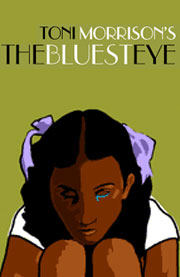
Image result for the bluest eyeToni Morrison's novel, The Bluest Eye, is just outstanding. It is a literary masterpiece that not only details the injustices that still are rampant in society today but also conveys them in a blatant method that is void of any euphemism. When I initially was introduced to the book, I was intrigued by the title. I didn't even know what to expect from it. Then after reading the fantastic story, I understood why the title is the way it is.

The title serves many purposes. At first glance, the ambiguity of the title symbolized the uncertainty and unstableness in African-American life. Pecola's life in the story is anything but stable. She goes from walking home from school one day and gets raped by her own father another day. The second task the title accomplishes is to show the delusional nature of beauty. Pecola thinks by just having blue eyes, all the problems in her world would be solved and would them be able to live a happy life in which she is not looked down upon. This clearly shows how twisted Pecola's mind is and how irrational her thoughts have become as a result of society's influence upon her. This also illustrates how beauty standards are all just a social construct that are solely based on people perceive them as. In fact, it also goes to show how vulnerable people are –especially young black girls– to these standards as Pecola's obsession with blue eyes eventually caused her to "[step] over into madness" (Morrison 206). Lastly, the title is symbolic for the insurmountable sorrow present throughout a life filled with inequality and discrimination. This is achieved through the connotation of "blue." Blue eyes are associated with people who can withstand discomfort and pain a lot more than others. "Blue" is the color of large bodies of water and is therefore associated with tears. Therefore, the fact the title is named "The Bluest Eye," suggests that is a symbol for vast amount of tears of sorrow and pain of blacks who live in an "unyielding" white society that continuously oppresses them.

Image result for blue eyes pecolaRelated imageImage result for oppression

Sunday, November 13, 2016

Pictures: Do They Really Tell a Thousand Words?

Image result for kehinde wiley officer of the hussarsArt has never really appealed to my sense of amazement. It just never really touched me in a profound way. In a day and age where digital cameras can capture vast landscapes and detailed portraits, I found paintings to be inferior and obsolete to cameras. Then, I was introduced to Kehinde Wiley's Officer of the Hussars painting.


It was at that moment that I realized that I couldn't be any more wrong.


Image result for officer of the hussars
The first thing that stood out to me was the drastic difference between the subject and setting. It seemed very odd for a modern man to be riding a horse in the middle of a war ground during the nineteenth century. Intrigued by this obvious feature, I researched some more about this painting and learned that Wiley's inspiration for this painting came from the original painting The Charging Chasseur by Theodore Gericault and that Wiley is known for replacing prominent white people in paintings with black ones in order to make a statement. Then, it all made sense. Wiley's voice finally reached me via his masterpiece. The act of replacing a white man of high rank a black with a person shows Wiley's desire for equality among blacks and whites. In addition, the fact that the white officer from Gericault's painting is looking down and the black man is looking straight forward suggests that whites constantly look down on minority races and don't give a chance for blacks to successfully live on "the unyielding earth" (Morrison 6) that society creates for them. 


Image result for word of paintingRelated imageImage result for deeper meaning

Sunday, November 6, 2016

Beauty: A Social Construct or a Scientific Observation?

Image result for toni morrisonBeauty. It seems like everyone in the world is obsessed with it, yet no one knows what it really is. Some strive to be the most beautiful, but in reality are wandering aimlessly simply because this "beauty" they seek isn't static but rather dynamic. "What does this mean?" you might ask. Well, Toni Morrison explains this concept quite clearly. She says that "Beauty [is] not simply something to behold; it [is] something one could do" (Morrison xi). Still not able to comprehend? Well that's okay as beauty is a very difficult concept to grasp and is more than what just meets the eye.

Image result for the bluest eyeContrary to popular belief, beauty is not defined by one ideal image. Rather, it is completely subjective and changes as it is seen through different eyes. For example, two people might stumble upon the same shirt in a clothing store. One of them thinks that the shirt looks very good and is beautiful while the other person might be in total disgust and think that the shirt is the ugliest shirt is the ugliest shirt in existence. In fact, in a sense, beauty can be described through the characteristics of clothing: it takes on an innumerable amount of forms, depending on each individual that views it. Now some might say that beauty only has one forms and that it only conforms to one ideal image. Now don't get me wrong; I'm not saying that isn't true. It is a fact that some objects or even people are considered ugly by almost everyone else as though some mysterious all-knowing master had given [them] a cloak of ugliness to wear" (Morrison 39). Although this may very well be the case, I pose the question, "How do people distinguish between ugliness and beauty?” This answer is simple: society. Society is the force that ingrains its people with an ideal image of beauty. People have the choice to follow this image or not to. Some just conveniently follow the image set forth by society because it the one that everyone else is following. As a result, only one form of beauty is clearly evident while the other forms are masked. Therefore, beauty isn't a scientific observation that people either have or don't have; rather, beauty is a subjective, volatile social construct.

Image result for opinionsRelated imageImage result for beauty word