
Saturday, March 18, 2017
The Language Debate: To Be PC or Not to Be PC?
The English language has evolved in a profound
way through the centuries of its existence. From the old ancestral English,
like “hus” for house; to the Shakespearean English, such as “ere” to mean
before to the present day English we’ve all come to know and love, including
words like “selfie” and “blog.” However, this modern language of ours doesn’t
come without its flaws though. The recent controversy surrounding political
correctness has English users divided: Should political correctness be strictly
enforced or should it be taken leniently? Some say that political correctness
is mandatory in an increasingly sensitive world in which small phrases or "microaggressions" can have
great implications. Conversely, others say that the strict enforcement of political
correctness restricts the right of free speech and excludes staple words and
phrases from the language. Although certain words or phrases may be offensive
to particular individuals and groups, efforts to eliminate hurtful terms from
the English language are impossible because interpretation is inherently
subjective. One example which illustrates the debate over word choice is the
attempt by some educators to remove The Adventures of Huckleberry Finn from
English curricula because of Twain’s use of “nigger.” Now, I can understand why
this term may offend black students, but Twain’s book captures the language of
the period and region accurately; moreover, the main black character, Jim, is
morally superior to the white characters around him. If all English programs
were to apply the logic of eliminating books from the classroom due to
offensive language, many of the literary masterpieces and their numerous life
lessons would never be taught again. On the other hand, one thing that must be
acknowledged in the offensive language controversy is the power of words to
evoke painful experiences and emotion. For example, individuals who have
experienced painful situations such as war and prison might get offended from
reading phrases like “it’s an uphill battle,” “hit them where it hurts,” and “shoot
yourself in the foot.” Reading or hearing such phrases that meant life or death
on the battlefield may be irritating or discounting when they are used in such
a causal manner in everyday speech. Now just because these ubiquitous idioms
might emotionally impact a few unfortunate individuals, these everyday phrases
are simply not just going to be eradicated from the English language; they have
become an essential component of the language itself. Even if one is
eliminated, others will still appear in its place. The NCAA’s position on
Native American name use for teams and mascots clearly demonstrates this
phenomenon. Just by banning the use of “racist” Native American names as sports
teams or team mascots will not solve the problem of racism because many other
modes, such as automobiles like the Jeep Cherokee, are available for which
racism can present itself in. Perhaps the only way to eradicate exclusion is
exclusion itself.


Sunday, March 12, 2017
The Government: Protector of the People or the Destroyer of Souls?

Sunday, March 5, 2017
Appearance: The Sole Distinguishing Factor of a Woman?
Appearance is one of many factors that make people who they
are. Some may consider their appearance very attentively while others may not
even care about it at all. Given that appearance is such a crucial element for
some, what makes up the appearance of an individual? Their face? Their body
shape? Or perhaps their clothing? I would consider all of these important
factors in determining appearance, but provided that clothing is the most
readily mutable factor, many consider it to be the determining factor to judge
one’s appearance on.
For men, clothing is more narrowly
spread. For example, most men wear suits
or dress shirts with ties as business attire. For casual wear, men mostly use
jeans or khakis and a t-shirt or collared polo.
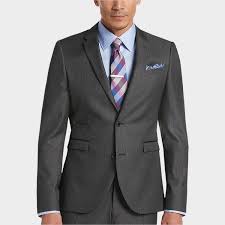
Thus, it can be seen that the there
is a clear “norm” for men to resort to while there is no such “norm” for women
to fall back to due to the vast variety of clothing they have to choose from.
Now it is clear why Tannen would remark that “there is no unmasked woman.” No
matter how they dress, it is nearly impossible to go unmarked.

Subscribe to:
Posts (Atom)